
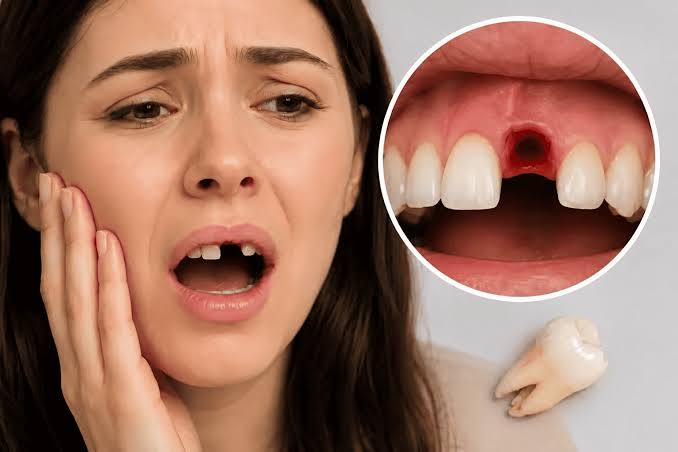
A knocked out tooth, one of the most urgent dental trauma and emergency dental care scenarios (avulsed tooth) is one of the true dental emergencies, a situation where the actions you take in the minutes after the injury occur directly determine whether the tooth can be saved. This is not a figure of speech. The survival of an avulsed permanent tooth depends almost entirely on two factors: the time between avulsion and reimplantation, and the storage medium used to keep the tooth viable during transport. Getting both right is achievable by anyone if they know what to do.
The Biology That Makes Speed Essential
When a tooth is knocked out, the periodontal ligament cells, the living tissue fibres that connect the tooth root to the surrounding bone, are stripped from part of the root surface and begin to die rapidly once exposed to air. These cells are essential for successful reimplantation; if they die, the tooth cannot reattach physiologically to the bone, and even if reimplanted it will typically undergo root resorption over time.
Periodontal ligament cells remain viable in a moist environment. They begin to die rapidly when dried, within fifteen to thirty minutes of dry exposure, the viability of the cells is significantly compromised. When stored in an appropriate medium (milk, saline, or the patient’s own saliva), they can remain viable for thirty to sixty minutes and in some cases longer.
This biology explains why the two key variables are time and storage medium. Getting to an emergency dentist within thirty minutes with the tooth stored appropriately in milk gives the highest probability of a successful outcome.
What to Do Immediately
Handle the tooth by the crown (the part that is normally above the gum) and not by the root. Touching the root compresses and potentially removes periodontal ligament cells from the root surface.
If the tooth is dirty, rinse it gently with milk or saline. Do not scrub it, do not use water if milk is available, and do not dry it. The goal is to remove gross contamination without removing the remaining periodontal ligament cells.
If the person is conscious, cooperative, and there is no risk of swallowing the tooth (which excludes young children and anyone with impaired consciousness), reimplant the tooth yourself immediately. Hold it by the crown, orient it correctly (the flat side faces forward), and gently but firmly push it back into the socket. Bite on a cloth or gauze to hold it in place, and get to an emergency dentist immediately.
If reimplantation on site is not possible, place the tooth in milk, not water, not tap water, and not wrapped in a tissue or cloth. Milk is widely available and maintains tooth viability significantly better than water. If milk is not available, place the tooth between the cheek and gum of the injured person (not a young child who might swallow it), the saliva environment provides some protection. Saline solution is a good alternative if available.
Go immediately to an emergency dentist and advise them on arrival that an avulsed tooth is involved. This is a clinical priority and you should be seen without delay.
What Happens at the Dental Clinic
At the emergency dental clinic, the dentist will assess the socket, clean it, and reimplant the tooth if it has not already been repositioned. X-rays will confirm the tooth’s position. A splint, a wire or fibre bond across adjacent teeth, will be placed to stabilise the reimplanted tooth for one to two weeks while initial healing occurs.
Root canal treatment is typically required for reimplanted permanent teeth in adults, as the nerve tissue within the root rarely survives the reimplantation process. This is initiated within days to weeks after reimplantation and is a standard component of avulsion management.
The long-term prognosis for a reimplanted tooth depends on the variables described above. A tooth reimplanted within fifteen to thirty minutes in an appropriate storage medium has a good chance of remaining in function for years, though long-term root resorption remains a risk that requires monitoring.
For Sydney residents in areas including Redfern and Surry Hills who may be close to dental facilities, understanding where to go in an emergency and how to find an emergency dentist Sydney saves critical time when a dental trauma actually occurs.
When a Tooth Cannot Be Reimplanted
Not all avulsed teeth are candidates for reimplantation. Baby (primary) teeth are generally not reimplanted due to the risk of damaging the developing permanent tooth beneath. Teeth with significant root damage, teeth that have been dry for more than an hour, and teeth with extensive pre-existing disease may not be appropriate for reimplantation.
When reimplantation is not possible, the options for tooth replacement include dental implants (after the extraction site has healed), bridges, and partial dentures. These are discussed at the follow-up appointment once the immediate emergency has been managed.
FAQs
Is a knocked-out baby tooth also an emergency? You should still see a dentist promptly after any dental trauma to a child, but baby (primary) teeth are not reimplanted. The concern for a knocked-out baby tooth is primarily ensuring the socket is healthy and that there is no damage to the underlying permanent tooth. The dentist will assess this and advise on monitoring for the permanent tooth’s development.
What if the tooth breaks off, is it still worth taking the fragment to the dentist? Yes. A fractured piece of a tooth should be kept moist and taken to the emergency appointment. If the fragment is large enough and in good condition, it may be possible to bond it back to the remaining tooth structure. At minimum, the dentist can use the fragment to assess the extent of the fracture and plan the appropriate restoration.
How long can a tooth survive in milk? Studies suggest that periodontal ligament cell viability in milk can be maintained for thirty minutes to two hours depending on initial cell condition and storage temperature. Cold milk slightly extends viability. Getting to an emergency dentist within thirty minutes regardless of storage medium provides the best outcome.
Can I go to a hospital emergency department for a knocked-out tooth? Hospital emergency departments are not typically equipped to reimplant avulsed teeth, they lack the dental equipment and expertise for this procedure. Emergency dental clinics are the appropriate destination. If you are unsure where to go, your regular dentist’s after-hours number will typically have an emergency referral. Calling ahead alerts the emergency dentist to expect you.
What is a dental splint and how long does it stay in? A dental splint is a thin wire or fibre bonded across the reimplanted tooth and two to three adjacent teeth to hold the reimplanted tooth in its socket while the initial healing phase occurs. For uncomplicated cases, splinting is typically maintained for one to two weeks. For more complex cases or where there is associated bone injury, longer splinting periods may be appropriate.
